FEATURED PRAISE FROM

A NOTE BEFORE THE BOOK
Foreword
By Amina J. Mohammed
DEPUTY SECRETARY-GENERAL, UNITED NATIONS
CHAIR, UNITED NATIONS SUSTAINABLE DEVELOPMENT GROUP
Ihave a confession to make.
When Owen Sakawa first sent me the manuscript for this book, I put it in the pile. You know the pile. Every person who has spent decades in international leadership and public service has one, the stack of well-intentioned books about values, culture, character, and the importance of authenticity, all of which say more or less the same thing in slightly different fonts. I was not expecting to be moved. I was not expecting to stay up until two in the morning. I was certainly not expecting to call the author the next day and ask if I could write this foreword.
Let me explain what changed my mind.
I have spent the better part of three decades working at the intersection of global governance and human trust, first in government in Nigeria, then as Special Adviser to former Secretary-General Ban Ki-moon, and now as the Deputy Secretary-General of the United Nations and Chair of the United Nations Sustainable Development Group. Our mandate spans 162 countries. The work is fundamentally a trust problem: how do institutions, governments, and communities build sufficient confidence in each other to act on the shared challenges that no single actor can solve alone? In all of that time, across all of those conversations, I have never encountered a more precise, more honest, or more useful account of what trust actually is and how it actually works than the one Owen Sakawa has written in these pages.
What separates this book from the pile is threefold.
First: precision. Sakawa defines his terms. Trust, as he uses it, is not a feeling or a vibe or a cultural value. It is a specific, measurable, buildable infrastructure, one that has identifiable components, known failure modes, and a documented repair protocol. This precision matters enormously, because you cannot fix what you cannot name, and most organisations that suffer from trust deficits cannot even accurately diagnose what they are missing.
Trust is not a feeling. It is infrastructure.
Second: honesty. This is not a book written from a position of untested authority. Owen Sakawa has built companies, lost partnerships, broken trust, and rebuilt it. He writes about the cost of trust failures the way only someone who has paid that cost can, without drama, without self-pity, but with the specific, granular detail that makes you recognise your own experience in his. That recognition is the beginning of change.
Third: timeliness. We are living through a trust crisis of civilisational proportions. The Edelman data, which Sakawa cites and extends, is alarming, but the lived experience is more alarming still. I have sat across tables from heads of state who no longer believe that their citizens trust them. I have spoken with corporate leaders who confess, in private, that they do not know how to rebuild the internal cultures that the last decade of disruption has eroded. I have watched the early deployments of artificial intelligence in healthcare and finance create new categories of trust failure that our existing frameworks were not designed to address.
Code of Trust is the book for this moment.
Code of Trust is the book for this moment. Not because it is optimistic, though it is, carefully and with evidence, but because it is serious. It takes the crisis seriously, takes the reader seriously, and takes the work of trust-building seriously enough to give us real tools rather than comfortable reassurances.
The chapter on AI governance alone would justify the price of this book for every board member, regulator, and technology executive alive. The chapter on trust repair is the most useful thing I have read on that subject in twenty years of watching institutions try and fail to recover from public failures of integrity. And the Trust Manifesto at the end, a simple, declarative, demanding document, is something I have already incorporated into the work of my own office.
Owen Sakawa is a builder. He builds companies. He builds frameworks. He builds relationships, carefully, over time, with the kind of consistency that makes people trust him before they have been given a reason to. This book is his most important construction yet. It is the manual he wishes he had had at the beginning.
It is the manual we all wish we had had at the beginning.
Read it with a pen. Read it twice.
Read it with a pen. Read it twice. And then do the hardest thing this book will ask of you: close it, put it down, and go be the person it describes.
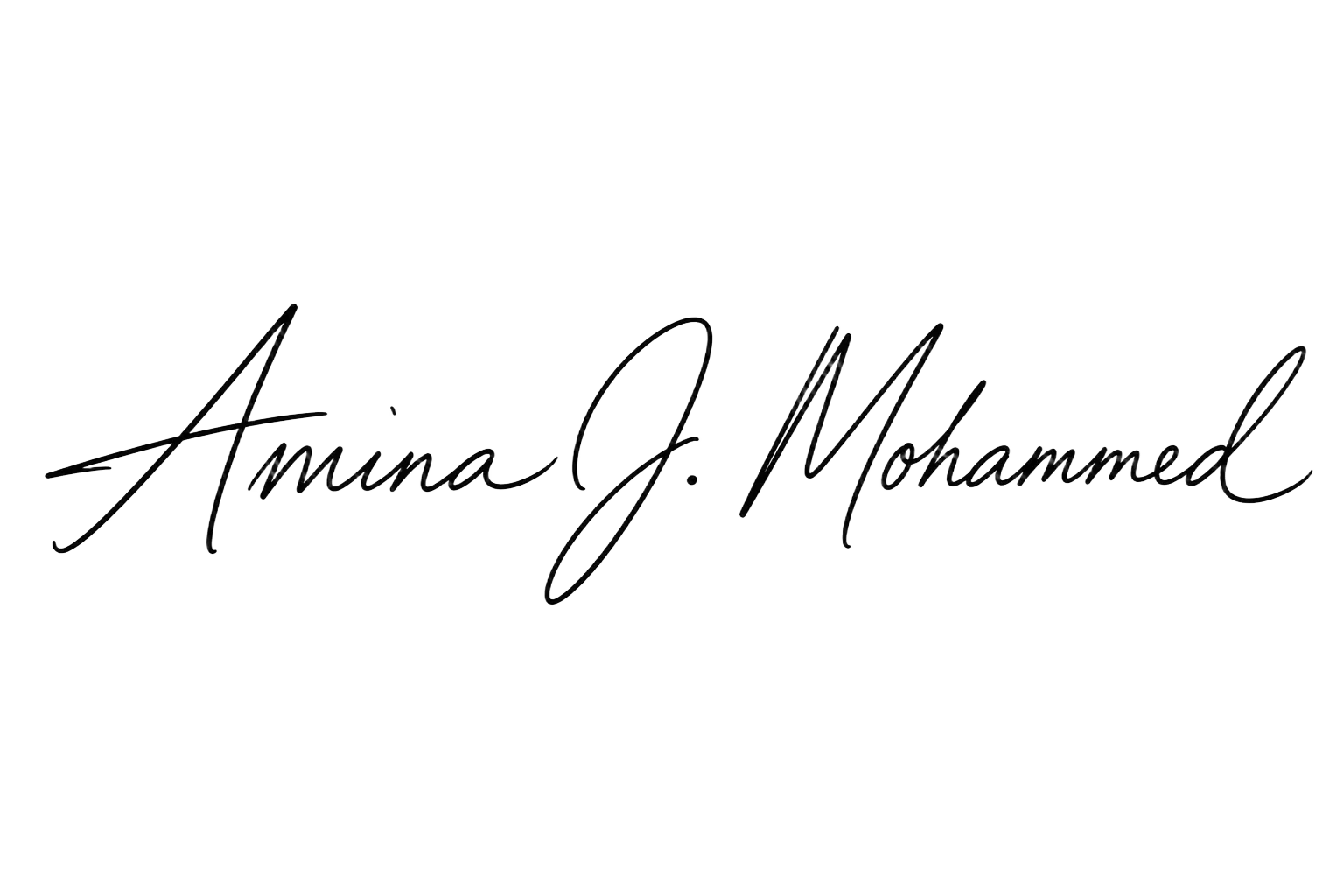
AMINA J. MOHAMMED
DEPUTY SECRETARY-GENERAL, UNITED NATIONS
CHAIR, UNITED NATIONS SUSTAINABLE DEVELOPMENT GROUP
New York, United States • 2026